

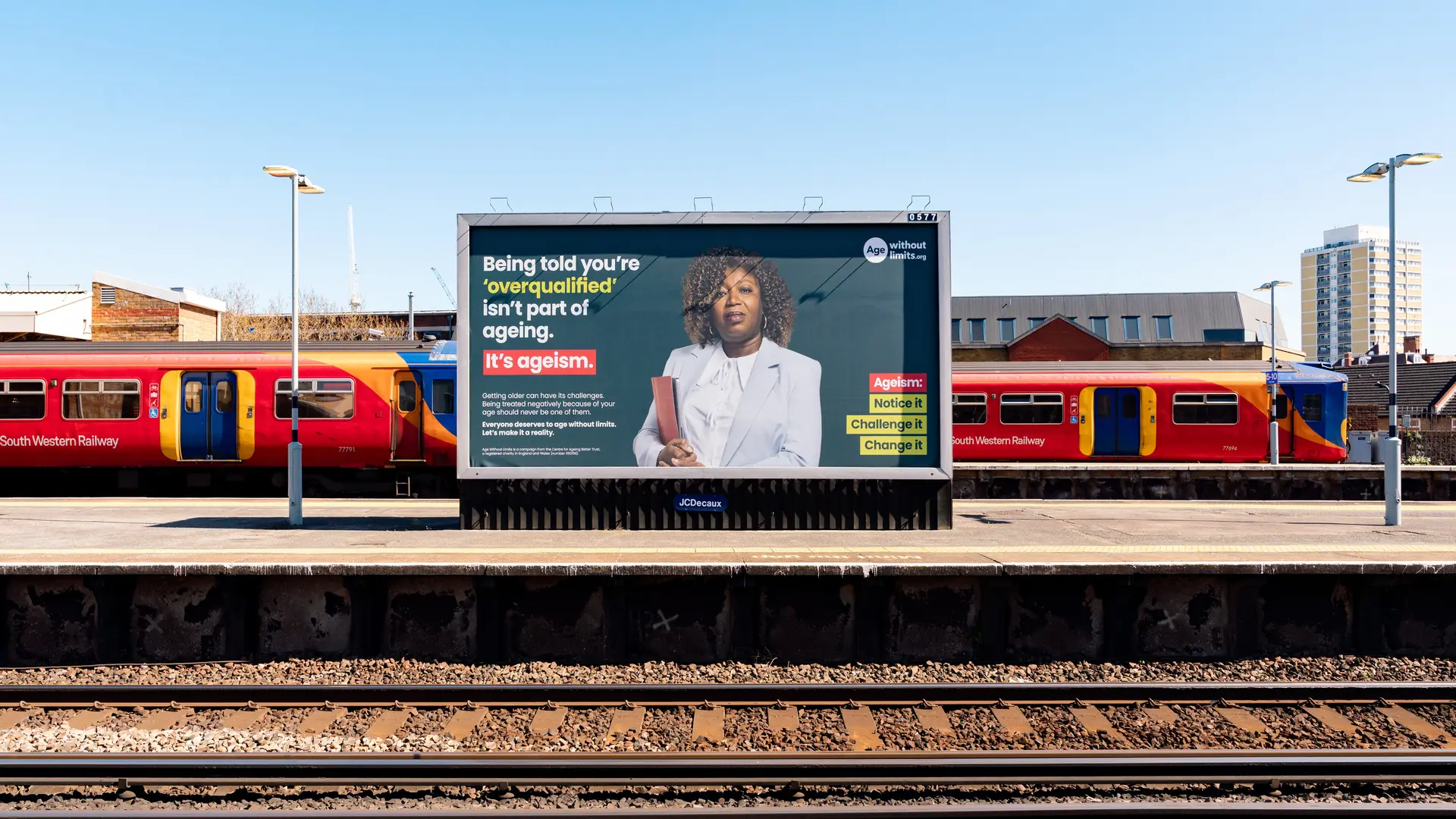
I’m on the metro. In front of me is an ad from a major company looking for new employees. I expect the usual smiling young graduates, seemingly fresh out of university and ready to conquer the corporate world. Instead, looking back at me from the poster is a charismatic, grey-haired guy who appears to be around 60. He looks as though he has plenty to offer and doesn’t need three exclamation marks to prove it.
It occurs to me that this is far from the first recruitment ad of its kind I’ve noticed lately. Experience is appearing in the picture more often — sometimes on its own, sometimes alongside a younger colleague. Is employer branding beginning to rethink its image of the “ideal employee”?
Is this a new advertising trend, or a sign of a deeper shift?

Age Diversity in Employer Branding
Internationally, the concept is known as age-inclusive employer branding — building an employer brand in which people of different ages can see themselves.
In a 2025 article, employer branding agency Wiser explores the risks of overlooking age diversity. The UK’s Institute of Practitioners in Advertising (IPA) also addresses the issue in its report on age inclusion in advertising agencies, encouraging intergenerational teams and mutual mentoring.
These examples reflect an interest in age as a factor in workplace culture and employer reputation. They also provide context for the visual shift we may be noticing in recruitment advertising.
Recruitment Advertising in Bulgaria: Is Something Changing?
There are signs of a similar direction in Bulgaria, although representative data measuring changes in the age representation of people in recruitment ads is lacking.
TELUS Digital Europe, for example, shared its People & Culture Director’s participation in a discussion on workplace ageism, organised by the American Chamber of Commerce in Bulgaria. Lidl Bulgaria connects its “Together at Lidl” message with diversity and inclusion.
This does not establish the intention behind any particular advertising poster. It does, however, show that the conversation about different generations at work is also part of employer communication in Bulgaria.
Why Are Generation X and Experienced Employees Becoming More Visible?
There is also a practical need behind this shift. Population ageing and labour shortages require employers to broaden the pool of people they reach. In its 2025 review of Bulgaria’s labour market, the OECD highlights these challenges and recommends taking more active steps to bring older people into employment.
In this context, the choice of faces in an advertisement takes on particular significance. When a company features employees of different ages, it can send a simple but powerful signal: “There’s a place for you here, too.”
For a candidate with a long career behind them, this is an invitation to consider a new opportunity. For a young person, it offers a glimpse of the environment in which they might take their first professional steps.
Mentoring: What Does the Advertisement Promise Young Talent?
The image of an experienced employee beside a younger colleague can tell a whole story without many words: someone will help you settle in, answer your questions and share their knowledge.
This message is particularly valuable to people at the start of their careers. A first job brings enthusiasm, but also uncertainty. The presence of a supportive colleague makes the promise of training more tangible and human.
At Lidl Bulgaria, for example, mentoring is explicitly built into its work experience programme for school students: young participants have an experienced professional alongside them to provide guidance.
But Why Should the Older Person Always Be the Mentor?
If a mature employee appears only as someone passing on knowledge, their role remains limited. They can also be the new colleague, learning a technology, changing professions or beginning the next chapter of their career.
It is equally valuable to see the younger person as a partner who contributes their own knowledge and perspective. Learning then becomes an exchange, and age differences become a resource for working together.
For young talent, this kind of employer communication can be a positive sign. Its real value, however, becomes clear after joining the company: is there time for questions, is knowledge shared, and do people have opportunities to develop regardless of their age?
That is when the image of two colleagues from different generations becomes a credible promise: “Here, you can start, contribute and keep growing.”
Article note
The image is part of Age Without Limits, a UK campaign by the Centre for Ageing Better that challenges age-related stereotypes and promotes greater inclusion of people over 50.